A hit-and-run accident in South Carolina can leave you with injuries, vehicle damage, and no insurance information from the driver who left. Your first priorities are to protect your safety, report the crash to law enforcement, seek medical care when needed, and preserve evidence that may identify the other vehicle or show how the collision happened.
South Carolina law treats an unknown owner or operator as an uninsured motorist for insurance purposes, subject to specific statutory conditions. Depending on the facts, your uninsured motorist coverage may provide a source of recovery even when the fleeing driver is never identified.
McCutchen Vaught Geddie & Hucks, P.A. helps people in Myrtle Beach, Horry County, and nearby South Carolina communities understand the police investigation, insurance claim process, evidence requirements, and filing deadlines that may follow a hit-and-run. A driver leaving the scene does not automatically end your ability to pursue compensation.





What Should You Do Right After a Hit-and-Run? 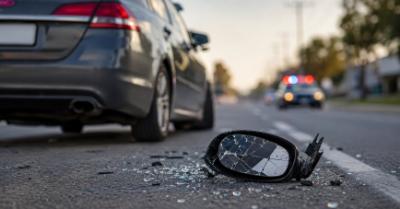
Do not chase the fleeing driver. A pursuit can create another collision, take you away from the original crash scene, and make it harder to preserve evidence.
Call 911 or the appropriate law enforcement agency as soon as possible. South Carolina law requires a driver involved in a crash causing injury or death to stop, remain at the scene, provide identifying information, and render reasonable assistance. A driver who leaves without fulfilling those duties may face criminal charges if identified.
If the crash appears to involve only vehicle damage and your vehicle is safely drivable but is blocking traffic, South Carolina law requires reasonable efforts to move the vehicle off the roadway. If the crash resulted in great bodily injury or death, a vehicle involved in the crash should not be moved until the investigating law enforcement officer authorizes it.
If you are physically able, gather what you can before the scene changes:
- Photograph the damage to your vehicle and the surrounding roadway.
- Write down the fleeing vehicle’s color, make, model, direction of travel, and any partial license plate number.
- Photograph debris, paint transfer, skid marks, traffic controls, and visible injuries.
- Get names and contact information for witnesses.
- Ask nearby businesses or property owners to preserve surveillance video.
- Save dash camera footage in its original format.
- Keep copies of the police report number, towing information, and insurance correspondence.
Preserve video and witness information as quickly as possible. Recordings can be overwritten, and witnesses can become harder to locate as time passes.
For more information about local collision claims, visit the firm’s Myrtle Beach car accident lawyers page:
https://lawyersatthebeach.com/myrtle-beach-car-accident-lawyers/





What Happens After You Report the Crash?
Law enforcement may document the crash scene, interview witnesses, review nearby video, collect vehicle debris, and use any plate information or vehicle description to try to identify the fleeing driver. The investigation may continue after you leave the scene.
The police investigation and your civil injury claim are separate matters. A criminal case focuses on whether the state can prove that a driver unlawfully left the scene. Your civil claim focuses on fault, insurance coverage, injuries, property damage, and other losses caused by the collision.
If police later identify the driver, the investigation may lead to criminal charges. South Carolina law makes leaving the scene of a crash involving injury or death a misdemeanor or felony depending on the severity of the harm. A conviction under the applicable hit-and-run statute can also result in driver’s license revocation.
What If the Hit-and-Run Driver Is Never Found?
An unknown driver does not necessarily mean that no insurance coverage is available. South Carolina automobile policies must include uninsured motorist coverage at least at the minimum limits required by state law.
South Carolina Code Section 38-77-170 sets special conditions for an uninsured motorist claim when the owner or operator of the vehicle that caused the injury or damage is unknown. The accident must be reported to an appropriate police authority within a reasonable time under the circumstances.
The insured must also satisfy at least one of these conditions:
- The injury or damage was caused by physical contact with the unknown vehicle.
- Someone other than the owner or operator of the insured vehicle witnessed the accident and signs the required affidavit, or the insured obtains a court-ordered presuit deposition when the affidavit cannot be obtained.
- An electronic or other recording shows that the unknown vehicle caused the injury or damage.
The insured must also show that the failure to identify the other vehicle and driver at the time of the accident was not caused by the insured’s negligence.
These requirements reflect the current version of Section 38-77-170, which was rewritten by a 2024 amendment effective May 20, 2024.
A no-contact hit-and-run can make evidence preservation especially significant. Dash camera footage, nearby surveillance video, or an independent witness may help establish that an unknown vehicle caused the crash.
For more information about uninsured driver claims and personal injury matters, visit:
https://lawyersatthebeach.com/myrtle-beach-personal-injury-attorneys/
You can also review the firm’s article about common mistakes after a hit-and-run accident in South Carolina:
https://lawyersatthebeach.com/blog/biggest-mistakes-hit-and-run-accident-south-carolina/
During this most difficult period of time in my life, Margaret Evans and the staff assisted me during my divorce. I needed legal counsel which was provided professionally and efficiently. Thank you for your prompt and courtesy service to me. Made the home closing process quick and easy! We appreciated their quick and clear communications, especially since our closing was over the holidays. See what our clients have to say about our law firm and the people who are a part of it.
- Mark Hafenbreidel
- Alyssa Burke
Client Reviews
Can You Make a Claim With Your Own Insurance Company?
Yes, when your policy and South Carolina law apply. A hit-and-run claim may be presented under your own uninsured motorist coverage even when you did nothing wrong.
South Carolina requires automobile policies to include uninsured motorist protection. Insurers must also offer optional additional uninsured motorist coverage up to the insured’s liability limits and must offer underinsured motorist coverage up to those liability limits.
Your insurer may investigate:
- Whether an unknown vehicle actually caused the crash.
- Whether the statutory requirements for an unknown-driver claim are satisfied.
- Whether you share any fault for the collision.
- Whether your injuries were caused by the crash.
- Whether medical treatment and claimed losses are supported by records.
- Which policy limits, exclusions, deductibles, or other coverages apply.
Collision coverage may help with vehicle repairs or a total loss, depending on your policy. Medical payments coverage, health insurance, workers’ compensation, or another automobile policy may also be relevant in some cases.
Different coverages can apply to different parts of the loss. Ask the insurer to identify which coverage it is evaluating for bodily injury, property damage, rental expenses, and medical bills.
What If the Driver Is Identified Later?
If law enforcement, witnesses, video footage, vehicle debris, or another source identifies the fleeing driver, the claim may change. The driver’s liability insurer may become a source of recovery if coverage exists.
If the driver has no liability insurance, uninsured motorist coverage may still matter. If the driver has liability insurance but the limits are too low to cover proven damages, underinsured motorist coverage may be relevant if you purchased that optional coverage.
The fact that a driver left the scene does not automatically prove that the driver caused the original collision. Fault still depends on evidence showing how the crash occurred.
For more information about how responsibility may be evaluated, visit:
https://lawyersatthebeach.com/blog/how-fault-is-determined-in-south-carolina-car-accident-cases/
What Compensation May Be Available?
A South Carolina hit-and-run injury claim may include compensation for losses that can be connected to the crash and supported by evidence. Depending on the facts, those losses may include:
- Emergency medical treatment and hospitalization.
- Follow-up care, therapy, medication, and future medical needs.
- Lost wages and reduced earning capacity.
- Vehicle repair or replacement.
- Rental expenses or loss of vehicle use when covered or legally recoverable.
- Physical pain and emotional distress.
- Permanent impairment, scarring, or disfigurement.
- Other documented accident-related expenses.
No settlement amount is automatic. The value of a claim depends on the severity and duration of the injuries, available insurance, medical evidence, wage documentation, fault disputes, policy terms, and other case-specific facts.
What Evidence Matters Most in a Hit-and-Run Claim?
Evidence can disappear quickly. A hotel, restaurant, convenience store, apartment complex, parking area, or private residence in Myrtle Beach may have a camera pointed toward a road or parking lot. Recordings may be overwritten before an insurance dispute or lawsuit develops.
Preserve photographs, videos, repair estimates, towing records, medical records, bills, receipts, wage information, and insurance correspondence. Keep a written timeline of medical appointments and major developments in the claim.
Useful evidence may include:
- Police reports and incident numbers.
- Photographs of the crash scene and vehicle damage.
- Dash camera footage.
- Business or residential surveillance recordings.
- Witness names, contact information, affidavits, or testimony.
- Vehicle debris or paint transfer.
- Medical records and bills.
- Wage and employment records.
- Repair estimates, towing bills, and rental records.
- Insurance policies, declarations pages, letters, emails, and claim notes.
The firm’s step-by-step guide to filing a car accident claim in South Carolina provides a broader checklist:
How Long Do You Have to File a Claim?
South Carolina generally applies a three-year limitations period to an action for injury to a person or the rights of another. For actions governed by South Carolina Code Section 15-3-530(5), the discovery rule generally requires the action to be commenced within three years after the person knew, or through reasonable diligence should have known, that a cause of action existed.
A three-year limitations period should not be treated as permission to delay. Insurance policies can require notice, unknown-driver claims have special statutory conditions, and video or witness evidence may disappear long before a lawsuit deadline.
Section 38-77-170 specifically requires an accident involving an unknown owner or operator to be reported to an appropriate police authority within a reasonable time under the circumstances.
Different deadlines and procedures can apply depending on the parties, the type of claim, insurance issues, and the facts. A lawyer can review the applicable deadlines instead of assuming that the general three-year rule controls every claim.
Can You File a John Doe Lawsuit Against an Unknown Driver?
South Carolina law provides a specific procedure for certain claims involving an unidentified motorist.
Under South Carolina Code Section 38-77-180, when an unknown owner or operator causes injury or damage through physical contact, an action may be filed against the unknown defendant as “John Doe.” The insurer has the right to defend the action in the name of John Doe.
This John Doe procedure is tied specifically to physical-contact cases under Section 38-77-180. A no-contact unknown-driver claim may still qualify for uninsured motorist coverage under Section 38-77-170 when its separate statutory requirements are met, such as qualifying witness evidence or a recording, but the Section 38-77-180 John Doe procedure should not be assumed to apply to every no-contact claim.
If the unknown driver is identified later, Section 38-77-180 also addresses the ability to pursue the identified owner or operator.
How Can a Myrtle Beach Hit-and-Run Attorney Help?
A hit-and-run case may require more investigation than an ordinary two-car collision. An attorney can help evaluate the available evidence, insurance policies, statutory requirements, and filing procedures that may apply.
Depending on the case, a lawyer may help with:
- Preserving surveillance recordings before they are deleted or overwritten.
- Interviewing witnesses and evaluating affidavit requirements.
- Reviewing uninsured and underinsured motorist coverage.
- Collecting medical, wage, repair, and insurance records.
- Communicating with insurers.
- Investigating whether another person, business, or policy may be relevant.
- Evaluating fault disputes and claimed damages.
- Determining whether litigation is appropriate.
- Reviewing whether a physical-contact John Doe action may be available.
Legal representation can also be useful when an insurer disputes whether an unknown vehicle was involved, argues that you share fault, questions whether treatment relates to the crash, or relies on a policy provision that requires closer review.
Speak With a Myrtle Beach Car Accident Attorney
A hit-and-run can leave you managing medical care, transportation problems, lost income, vehicle repairs, and insurance questions without knowing whether the other driver will ever be found.
McCutchen Vaught Geddie & Hucks, P.A. offers free consultations for personal injury matters. The firm can review the crash, available evidence, insurance coverage, and possible next steps without promising a particular result.
Call 843-277-1667 or visit:
https://lawyersatthebeach.com/contact-us/
The firm serves clients in Myrtle Beach, Horry County, and nearby South Carolina communities.
This article is for informational purposes only and is not legal advice. Reading this article does not create an attorney-client relationship. Consult an attorney about your specific situation.