A bar fight in Myrtle Beach can lead to several criminal allegations, even when the confrontation lasts only a few seconds. Depending on the evidence, police may file charges involving assault and battery, public disorderly conduct, resisting arrest, trespass, property damage, or group violence.
The exact charge can depend on the reported injuries, surveillance video, witness statements, conduct toward law enforcement officers, and whether anyone allegedly used an object as a weapon. An arrest is not a conviction. The evidence should be reviewed carefully before anyone assumes that one police report provides the complete account.
McCutchen Vaught Geddie & Hucks, P.A. represents people facing criminal charges in Myrtle Beach, South Carolina, and nearby areas. A criminal defense attorney can review the accusation, explain the possible penalties, preserve evidence, and identify defenses supported by the facts.





Why Myrtle Beach Bar Fight Cases Can Become Complicated 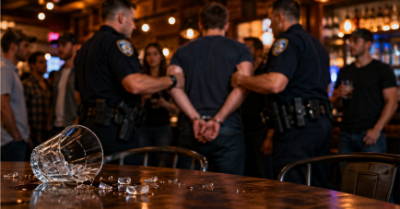
Bars, restaurants, hotels, and entertainment districts in Myrtle Beach often bring together residents, visitors, large groups, security personnel, loud music, and alcohol. A disagreement involving a spilled drink, a comment, a place in line, or an accidental bump can become physical quickly.
Police officers may arrive after the confrontation has ended. They may see an injured person, hear conflicting accounts, and make an arrest based on the information available at that moment. Cellphone video may begin after the first physical act. Friends may enter the confrontation, and security personnel may restrain someone before officers determine what occurred.
Important questions may include:
- Who used or threatened force first?
- Did anyone attempt to leave or avoid the confrontation?
- Did more than one person participate?
- What injuries were documented?
- Did surveillance footage capture the beginning of the incident?
- Did the accused person follow police or security instructions?
- Did anyone possess or use an object that could cause serious injury?
A Myrtle Beach criminal defense attorney can compare the filed charge with the available evidence rather than relying on one witness statement.
Assault and Battery in the Third Degree
Under South Carolina Code Section 16-3-600, assault and battery in the third degree may apply when a person unlawfully injures another person or offers or attempts to injure another person while having the present ability to do so.
The offense is a misdemeanor. A conviction may result in:
- A fine of up to $500
- Imprisonment for up to 30 days
- Both a fine and imprisonment
A push, slap, punch, or attempted strike may lead to an investigation under this section. The prosecution must still prove every required element beyond a reasonable doubt.
Possible issues for the defense may include self-defense, defense of another person, mistaken identity, conflicting witness statements, or evidence that another person caused the alleged injury.
Learn more about the firm’s Myrtle Beach assault representation:
https://lawyersatthebeach.com/myrtle-beach-assault-attorneys/





Assault and Battery in the Second Degree
A fight may lead to a second-degree assault and battery charge when moderate bodily injury results or could have resulted. South Carolina law defines moderate bodily injury through specific categories that may include:
- Prolonged loss of consciousness
- Temporary or moderate disfigurement
- Temporary loss of the function of a bodily member or organ
- An injury requiring medical treatment involving regional or general anesthesia
- A fracture or dislocation
The statutory definition excludes certain minor injuries that ordinarily do not require extensive medical care.
Assault and battery in the second degree is a misdemeanor. A conviction may result in:
- A fine of up to $2,500
- Imprisonment for up to three years
- Both a fine and imprisonment
Medical records, photographs, surveillance footage, and witness statements may determine whether the reported injury supports the filed charge. A bruise or cut does not automatically establish the injury level required for every higher-degree offense.
Assault and Battery in the First Degree
Assault and battery in the first degree is a felony under South Carolina law. It can apply in several circumstances, including certain unlawful injuries or attempted injuries involving conduct accomplished by means likely to produce death or great bodily injury.
A conviction can result in imprisonment for up to 10 years.
In a bar fight investigation, law enforcement may examine allegations involving a broken bottle, a heavy object, repeated kicking, or force that caused someone to fall onto a hard surface. The presence of a serious allegation does not establish guilt. The prosecution must prove that the conduct satisfies every element of the charged offense.
During this most difficult period of time in my life, Margaret Evans and the staff assisted me during my divorce. I needed legal counsel which was provided professionally and efficiently. Thank you for your prompt and courtesy service to me. Made the home closing process quick and easy! We appreciated their quick and clear communications, especially since our closing was over the holidays. See what our clients have to say about our law firm and the people who are a part of it.
- Mark Hafenbreidel
- Alyssa Burke
Client Reviews
Assault and Battery of a High and Aggravated Nature
Assault and battery of a high and aggravated nature, commonly called ABHAN, is a felony. It applies when a person unlawfully injures another person and either:
- Great bodily injury results
- The act is accomplished by means likely to produce death or great bodily injury
South Carolina law defines great bodily injury as an injury that creates a substantial risk of death or causes serious, permanent disfigurement or a protracted loss or impairment of a bodily member or organ.
A conviction for ABHAN may result in imprisonment for up to 20 years.
Evidence concerning the nature of the force, the reported injury, medical treatment, and the sequence of events can be central to the case.
Assault and Battery by Mob
A group confrontation can raise a separate legal issue. South Carolina law defines a mob as two or more people assembled with a premeditated purpose and intent to commit an act of violence against another person.
When an act of violence by a mob results in bodily injury, third-degree assault and battery by mob is a misdemeanor punishable by imprisonment for up to one year.
A crowded or spontaneous dispute does not automatically establish a premeditated group plan. Relevant evidence may include:
- Surveillance footage showing when each person entered the confrontation
- Text messages or social media messages
- Statements made before the incident
- Witness descriptions of each participant’s conduct
- Evidence showing whether the participants acted together
The prosecution must prove the required shared purpose and intent, not merely the presence of several people.
Public Disorderly Conduct
Public disorderly conduct may be charged after an arrest at a bar, hotel, restaurant, sidewalk, or entertainment venue. South Carolina Code Section 16-17-530 addresses specified conduct in public places and gatherings, including gross intoxication and disorderly or boisterous behavior.
The offense is a misdemeanor. A conviction may result in:
- A fine of up to $100
- Imprisonment for up to 30 days
- Both a fine and imprisonment
South Carolina law also provides a conditional discharge process for some eligible first-time defendants. Eligibility and the consequences of accepting a proposed resolution should be reviewed with an attorney.
A public disorderly conduct charge may appear with an assault allegation or as a separate charge. Before resolving the case, the accused person should understand the possible effects on a criminal record, employment, professional licensing, education, immigration status, and expungement eligibility.
Resisting Arrest or Assaulting an Officer
South Carolina Code Section 16-9-320 makes it unlawful to knowingly and willfully resist an arrest by a person whom the accused knows or reasonably should know is a law enforcement officer.
Resisting arrest under this section is a misdemeanor. A conviction may result in:
- A fine between $500 and $1,000
- Imprisonment for up to one year
- Both a fine and imprisonment
Knowingly and willfully assaulting, beating, or wounding an officer while resisting arrest is a felony. A conviction may result in:
- A fine between $1,000 and $10,000
- Imprisonment for up to 10 years
- Both a fine and imprisonment
Police body-camera footage can be important in these cases. An officer, the accused person, and bystanders may describe the same movement differently. Video may help show what instructions were given, whether the accused person heard them, and how the physical interaction developed.
Do not physically resist an arrest. Disputes about probable cause, officer conduct, or the validity of the arrest should be addressed through the legal process.
Trespass After Being Told to Leave
A bar, restaurant, hotel, or club may direct a patron to leave. South Carolina Code Section 16-11-620 makes it an offense to enter another person’s premises after receiving a warning not to enter or to refuse to leave after an authorized person requests departure.
A conviction may result in:
- A fine of up to $200
- Imprisonment for up to 30 days
A trespass allegation may arise when someone remains at the location to argue about what happened or attempts to return for friends or belongings. After staff members or law enforcement officers direct a person to leave, remaining at or returning to the property may create an additional legal issue.
Property Damage and Related Allegations
Broken glassware, furniture, doors, railings, vehicles, or equipment may lead to malicious injury to property allegations and restitution requests. The level of the charge may depend on the value of the alleged damage and the mental state that the prosecution must prove.
The person standing nearest to damaged property is not necessarily responsible for it. Useful evidence may include:
- Surveillance video
- Photographs of the property
- Repair or replacement estimates
- Witness statements
- Receipts or ownership records
- Evidence showing when the damage occurred
Depending on the circumstances, an arrest may also involve allegations concerning a weapon, false identifying information, underage alcohol possession, or an outstanding warrant.
Evidence That Can Shape a Bar Fight Case
Objective evidence may provide a clearer account than the loudest or earliest accusation. Useful evidence may include:
- Bar, hotel, or restaurant surveillance footage
- Cellphone videos and photographs
- Police body-camera recordings
- 911 calls and dispatch records
- Security reports and employee statements
- Credit card receipts and transaction times
- Text messages and location information
- Medical records and injury photographs
- Witness names and contact information
Surveillance systems may automatically overwrite recordings. Prompt preservation requests can help prevent important footage from being lost.
Preserve the Evidence Before It Disappears
A few minutes of video can change how the entire confrontation is understood. Early action may help preserve footage, identify witnesses, and establish the sequence of events.
Read more about assault allegations after a festival or bar fight in Myrtle Beach:
Review the firm’s South Carolina post-arrest guide:
Possible Defense Issues
No single defense applies to every bar fight case. A criminal defense attorney may evaluate:
- Self-defense
- Defense of another person
- Mistaken identity in a crowded location
- Video that begins after the confrontation started
- Conflicting witness statements
- Failure to prove the required injury level
- Lack of a premeditated shared purpose in a group-fight allegation
- Conduct that does not satisfy the required intent
- Police statements that differ from body-camera footage
- Evidence that the accused person attempted to withdraw from the confrontation
Alcohol may affect memory, perception, and witness reliability. It does not remove the prosecution’s burden to prove every element of the charge beyond a reasonable doubt.
What to Do After Release
After release from custody:
- Follow every bond condition, court notice, and no-contact order.
- Do not contact the alleged victim directly or through friends, social media, coworkers, or another person.
- Do not return to the establishment if staff members or law enforcement officers instructed you to stay away.
- Preserve photographs, messages, receipts, videos, and location information.
- Write a private account of what happened while the details remain fresh.
- Do not post your account, photographs, or opinions about the case online.
- Do not delete messages, videos, posts, or other potential evidence.
- Do not ask witnesses to change, coordinate, or improve their accounts.
- Attend every required court appearance.
- Speak with a criminal defense attorney before discussing the incident with investigators or prosecutors.
A local attorney can identify whether the matter is pending in municipal court, magistrate court, or the Court of General Sessions. The attorney can also explain upcoming deadlines, bond conditions, evidence-preservation options, and possible resolutions.
Learn more about the firm’s criminal defense services:
https://lawyersatthebeach.com/myrtle-beach-criminal-defense-lawyers/
Speak With a Myrtle Beach Criminal Defense Attorney
A bar fight arrest can affect your freedom, record, employment, education, housing, travel, and reputation. Early legal review may help preserve video, identify witnesses, clarify the filed charge, and prevent avoidable bond or no-contact violations.
McCutchen Vaught Geddie & Hucks, P.A. offers free consultations for criminal defense matters. The firm serves clients in Myrtle Beach, North Myrtle Beach, Litchfield, and nearby South Carolina communities.
Call (843) 277-1667 to discuss your arrest with a Myrtle Beach criminal defense attorney.
https://lawyersatthebeach.com/contact-us/
This article is for general informational purposes only. It is not legal advice and does not create an attorney-client relationship. Consult an attorney about the facts of your specific situation.