Tourists visiting South Carolina can face arrest for alcohol-related conduct in public spaces when behavior is considered disruptive, unsafe, or disorderly. Law enforcement treats visitors and residents the same under state law, which means unfamiliarity with local rules does not prevent an arrest. In Myrtle Beach and other coastal destinations, alcohol-related enforcement is common in busy tourist areas where public safety concerns are heightened.
McCutchen Vaught Geddie & Hucks, P.A. regularly represents individuals charged with DUI and criminal offenses throughout Myrtle Beach and surrounding communities, including visitors who are unfamiliar with South Carolina law. Many of these cases involve misunderstandings about how public intoxication-related conduct is charged and enforced.





How South Carolina Handles Public Intoxication-Related Conduct 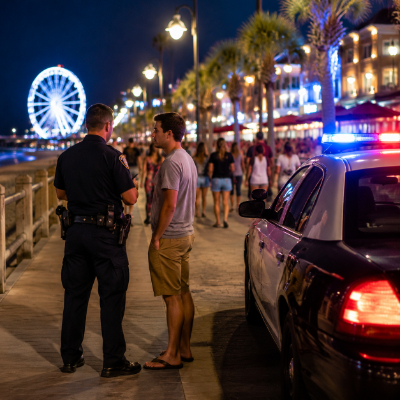
South Carolina does not have a standalone offense labeled strictly as “public intoxication.” Instead, law enforcement typically relies on related statutes to address behavior involving alcohol in public spaces. The legal focus is not on whether a person has consumed alcohol, but whether their behavior creates a disturbance, safety risk, or violation of public order.
Common charges used in these situations include disorderly conduct, open container violations, and in some cases DUI if the individual is operating a vehicle while impaired. Disorderly conduct is one of the most frequently used charges because it covers a broad range of behaviors that interfere with public peace, including loud arguments, aggressive actions, or inability to safely care for oneself in a public setting. These cases are highly fact-specific, and officers have broad discretion in determining when an arrest is necessary.
Can Tourists Be Arrested for Public Intoxication Behavior
Tourists can absolutely be arrested for alcohol-related public behavior in South Carolina. State law does not provide exceptions based on residency or vacation status. If conduct violates public safety laws, officers are authorized to make an arrest regardless of whether the individual is a resident or visiting for a short stay.
In practice, many tourist-related arrests occur in areas with heavy foot traffic, nightlife activity, or beach access points. A situation that begins as harmless celebration can escalate quickly if behavior becomes disruptive or draws complaints from other members of the public. Even without intent to cause problems, intoxication can lead to misjudgment, resistance to instruction, or unsafe conduct that results in law enforcement involvement.
McCutchen Vaught Geddie & Hucks, P.A. frequently assists visitors in Myrtle Beach who are surprised to learn how quickly these encounters can escalate into criminal charges.





Where These Arrests Commonly Occur in Myrtle Beach and Coastal Areas
Enforcement of alcohol-related laws is often more visible in tourist-heavy areas. Myrtle Beach, in particular, sees a significant increase in patrols during peak travel seasons when large crowds gather along the coastline, entertainment districts, and hotel zones.
Common locations include beaches, boardwalk areas, bars and restaurants with outdoor seating, and public events or festivals. These environments often involve a mix of alcohol consumption and dense crowds, which increases the likelihood of disturbances or misunderstandings. Law enforcement presence is typically higher in these areas to maintain safety and manage large visitor populations.
Even relatively minor behavior, such as loud speech or public arguments, can draw attention in these settings and lead to an investigation.
Charges That Commonly Follow Alcohol-Related Public Incidents
Public intoxication situations often involve multiple charges rather than a single offense. Law enforcement evaluates the full scope of behavior before determining what charges apply. Disorderly conduct is one of the most common outcomes, but additional charges may be added depending on circumstances.
These may include open container violations if alcohol is consumed in restricted public areas, resisting arrest if an individual does not comply with instructions, or DUI if a vehicle is involved. Each charge carries its own potential penalties, including fines, probation, and possible jail time depending on severity and prior record.
More information about DUI consequences can be found here:
https://lawyersatthebeach.com/blog/the-consequences-of-a-dui-in-south-carolina-and-how-to-fight-the-charges/
DUI Concerns vs Public Intoxication Situations
One of the most important distinctions in South Carolina law is the difference between public intoxication-related behavior and DUI. Public intoxication cases generally involve conduct in pedestrian areas, while DUI involves operating a motor vehicle while impaired.
Visitors often misunderstand how quickly an alcohol-related situation can shift from a public conduct issue to a DUI investigation. For example, someone leaving a bar and attempting to drive while impaired may face DUI charges even if their initial behavior was limited to public drinking or disturbance. DUI cases are treated seriously under South Carolina law and can carry significant penalties.
Further details about DUI charges and legal options can be found here:
https://lawyersatthebeach.com/blog/understanding-south-carolina-dui-laws-what-you-need-to-know-if-charged/
For first-time situations, this resource provides additional guidance:
https://lawyersatthebeach.com/blog/first-time-dui-charges-in-south-carolina-what-are-your-options/
What Happens After an Arrest for Tourists
When a visitor is arrested, the process typically begins with detention, booking, and a bond hearing. Depending on the circumstances, release may occur within hours or after a court appearance. Tourists often face added complexity because they may need to return to another state while their case remains active in South Carolina.
This can lead to missed deadlines, confusion about court requirements, and difficulty managing legal obligations remotely. The court process continues regardless of where the individual resides, and failure to comply with court instructions can result in additional penalties.
A detailed overview of the process is available here:
https://lawyersatthebeach.com/blog/what-to-do-if-youve-been-arrested-in-south-carolina-a-step-by-step-guide/
During this most difficult period of time in my life, Margaret Evans and the staff assisted me during my divorce. I needed legal counsel which was provided professionally and efficiently. Thank you for your prompt and courtesy service to me. Made the home closing process quick and easy! We appreciated their quick and clear communications, especially since our closing was over the holidays. See what our clients have to say about our law firm and the people who are a part of it.
- Mark Hafenbreidel
- Alyssa Burke
Client Reviews
Rights of Visitors During Police Encounters
Tourists in South Carolina have the same constitutional rights as residents. These include the right to remain silent, the right to legal representation, and the right to contest charges in court. These rights remain in effect during all stages of an encounter with law enforcement, from initial questioning through arrest and court proceedings.
Many individuals unintentionally harm their own cases by providing statements without fully understanding how they may be interpreted later. Remaining calm and avoiding unnecessary discussion about alcohol consumption or intent is often important in these situations.
Defense Considerations in Public Intoxication-Related Cases
Defending these types of charges often requires a careful review of police conduct, witness statements, and available evidence. Key questions often include whether officers had reasonable cause to make an arrest, whether the behavior actually met the legal definition of disorderly conduct, and whether any evidence was misinterpreted.
Video footage, body camera recordings, and third-party witness accounts may play a significant role in evaluating what actually occurred. In some cases, charges may be reduced or dismissed depending on the strength of the evidence and procedural factors.
Practical Steps if You Are Stopped or Arrested While Visiting
If law enforcement becomes involved during a visit, the way a person responds can influence the outcome of the situation. Remaining calm, complying with lawful instructions, and avoiding confrontation are critical. It is also important not to make statements that could be used later in court.
After the incident, obtaining legal guidance quickly can help address court requirements and minimize long-term consequences. Tourists often benefit from having local representation handle court appearances and negotiations while they return home.
More guidance on initial steps after an arrest can be found here:
https://lawyersatthebeach.com/blog/what-to-do-if-youve-been-arrested-in-south-carolina-a-step-by-step-guide/
Cases involving visitors often require additional coordination because they involve travel schedules, jurisdictional issues, and out-of-state communication. Having local legal counsel helps ensure that court obligations are met and that the case is handled efficiently within South Carolina’s legal system.
McCutchen Vaught Geddie & Hucks, P.A. provides representation for individuals facing DUI and criminal charges in Myrtle Beach and throughout South Carolina. The firm assists clients in understanding their charges, navigating the court process, and working toward the most favorable resolution possible under the circumstances.